
 Compare
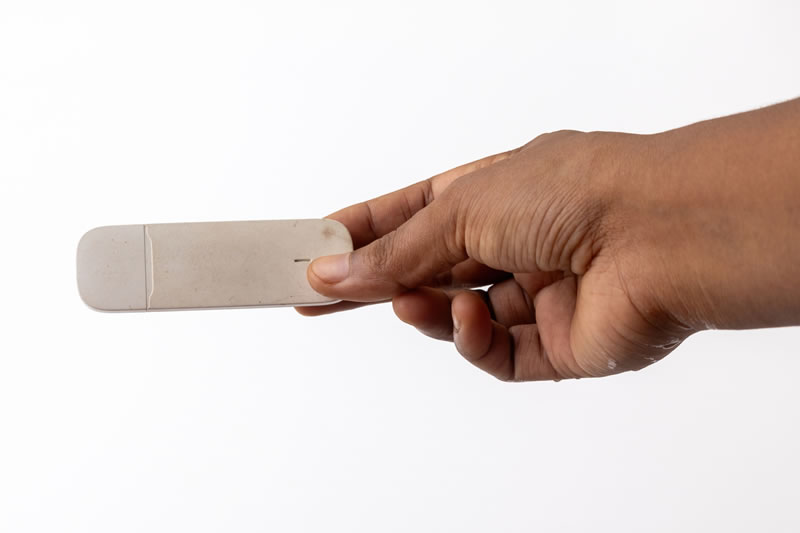
Mobile broadband is a term for devices that let you get your gadgets online when there’s no Wi-Fi available. Most commonly these are battery-powered routers that broadcast a 4G or 5G signal, but there are also dongles that can be plugged directly into the device you want to get online.
Obviously, 5G ones are fastest, but they can also cost more, and for some uses 4G ones will be speedy enough. Below we’ll look at the sorts of speeds you can expect from both.
How fast is 5G mobile broadband?
| Network | Average speeds | View deals |
|---|---|---|
| Three | 187Mbps | View deals |
| Vodafone | 130.9Mbps | View deals |
| EE | 92.2Mbps | View deals |
| O2 | 89.9Mbps | View deals |
If you want the fastest possible mobile broadband then you’ll want a 5G device, of which there are a number available.
At the time of writing, you can for example get the Vodafone 5G Mobile Hotspot. This Vodafone device is a rebranded ZTE U50, and offers download speeds of up to 2.63Gbps.
That’s not an especially useful number though, since the UK’s networks aren’t actually capable of those sorts of speeds yet. In practice, an Opensignal report from January 2026 found that the average 5G download speed on Vodafone’s network was 130.9Mbps, so something in that region is more likely – though peak speeds could reach around 1Gbps.
You can get the same device on Three where it’s called the Three 5G MiFi, but Three’s average 5G download speeds are a lot higher according to that report, at 187.0Mbps.
Another option would be the Netgear Nighthawk M7 Pro, available from O2. This has theoretical top speeds of 6Gbps, while O2’s average 5G download speed according to that Opensignal report is 89.9Mbps. O2 also currently sells the Netgear Nighthawk M7 and the Netgear Nighthawk M3, both of which are cheaper and less capable, but still deliver 5G speeds.
And then there’s EE, which stocks the EE 5G WiFi. EE’s current plans for this top out at 100Mbps (even though the network claims it can average speeds of 146Mbps), while Opensignal found that EE’s network has an average 5G download speed of 92.2Mbps.
Of course, you could also buy a 5G mobile broadband device from a third-party store and then put a different network’s SIM card in it, giving you more options.
Note though that you’ll only get any of the sorts of speeds above in 5G areas. If you’re using a 5G mobile broadband device in an area that only has a 4G signal, then you’ll get 4G speeds, detailed below.
How fast is 4G mobile broadband?
| Network | Average speeds | View deals |
|---|---|---|
| EE | 35.9Mbps | View deals |
| Vodafone | 25.4Mbps | View deals |
| Three | 22.4Mbps | View deals |
| O2 | 18Mbps | View deals |
The speed of 4G mobile broadband will depend on a number of factors, including the mobile broadband device you’re using, the mobile network it’s connected to, and what the signal and coverage is like where you are.
However, to keep things simple we’ll focus on average and maximum speeds here.
In terms of maximum, the TCL Linkzone MW63 offered by O2, the Vodafone 4G Mobile Hotspot, and the Three 4G MiFi all claim download speeds of up to 300Mbps, while peak upload speeds are likely to be in the region of 50Mbps. The EE 4G WiFi is likely capable of similar, though EE is less transparent about its peak speeds.
However, in practice you’re not likely to get anywhere near the maximum speed offered by any of these devices. Rather, you’ll be limited by the networks, which on 4G tend to top out at more like 90Mbps, and even then, average speeds will likely be a lot lower.
While there’s not much data on average mobile broadband speeds, for smartphones the average 4G download speed – according to Opensignal data from April 2020 – is 35.9Mbps on EE, 22.4Mbps on Three, 25.4Mbps on Vodafone, and 18.0Mbps on O2. We’re using this older data because most newer reports don’t split out 4G speeds.
So that’s a long way short of the maximum speeds, but should still be plenty for most requirements.
What about latency?
| Network type | Average speeds |
|---|---|
| 4G | 36-48ms |
| 5G | 29-34ms |
| Fibre Broadband | 20-25ms |
Latency is a measure of how long a network takes to respond to a request and it can affect the perception of speed, as well as making a big difference in things like online games.
It’s measured in milliseconds (ms) and on 4G mobile broadband you can expect it to average in the region of 36.0-48.3ms (depending on network, and according to April 2020 data from Opensignal), while on 5G it tends to average around 29-34ms (according to Speedtest data from 2024).
The lower the latency the better, but this only really matters in very fast paced games, such as first-person shooters like Call of Duty. In reality for most users anything under 50ms is more than low enough for smooth gameplay.
How do they compare to Wi-Fi?
In terms of home and office Wi-Fi you’ll generally find that 4G mobile broadband is slower, while 5G mobile broadband can sometimes rival or beat it, but if you have access to full fibre broadband that will still typically beat 5G.
In a 2025 Ofcom report, it was found that the average maximum download speed with UK broadband was 285Mbps, and some broadband plans advertise peak speeds as high as 2Gbps. But at the low end, some connections are still below even 4G speeds.
Of course, comparing to home broadband isn’t entirely fair anyway – after all, 4G and 5G mobile broadband is designed for when you’re out and about, so it’s an alternative to either no connection or public Wi-Fi, which is typically slower than the internet people have in their homes.
There’s not much data on exact speeds, and it will vary a lot, but if you’ve used public Wi-Fi you’re probably familiar with how slow it can sometimes be, not to mention often having usage limits, high charges, and frustrating registration pages, as well as not being very secure, all of which you can avoid with mobile broadband.